The Faucet Is the Toughest Reviewer: A Smart Mirror Speaker Test for Real Mornings
Photo: Project Kei, CC BY-SA 4.0, via Wikimedia Commons
Smart mirror makers love to list speaker wattage like it is a trophy. In a bathroom, the trophy does not matter. The faucet, the exhaust fan, and a wall of tile all get a vote, and they usually vote against clean audio. If you are considering a mirror with built-in speakers or a voice assistant, the useful question is not how loud it can get. It is whether you can ask for the weather while brushing your teeth without sounding like you are negotiating with a drive-thru speaker.
The bathroom is a small, rude concert hall
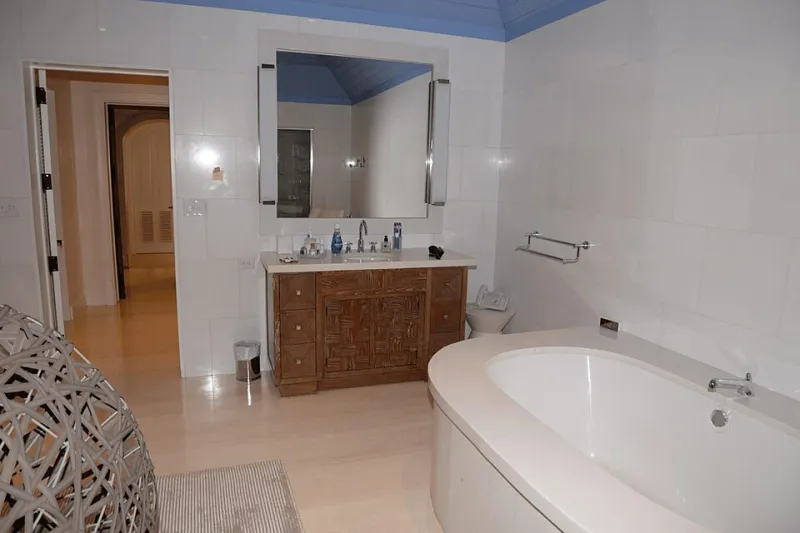
A typical US bathroom is a hard-surface box. Ceramic tile, glass, mirrors, and countertops bounce sound around instead of absorbing it. Add running water and a ventilation fan, and you have a room that is actively working against intelligibility. A speaker that sounds warm and full in a carpeted showroom can turn brittle and echoey over a sink.
The microphone side matters just as much. Voice assistants need to hear you over water, fan hum, and the occasional hair dryer. A mirror can have a perfectly decent speaker and still fail the morning test because its microphone array cannot separate your voice from the splash zone.
Run the three-noise test before you trust a demo
A proper evaluation does not require lab equipment. It requires a willingness to make the demo a little awkward.
Start with the faucet. Run water at a normal hand-washing level, not a dramatic waterfall. Stand where you would actually stand and ask the mirror a simple question or give a command. Can it hear you on the first try? Does the reply come through clearly, or do you have to lean in and repeat yourself? Now try with the exhaust fan on. That low, steady rumble is often tougher on microphones than splashing water.
Then add morning chaos. Play a podcast or music at a reasonable volume and speak over it. Open the door. Drop a comb. Ask for a timer while the water is running. The point is not to create a torture chamber. It is to mimic the way people actually use these devices: half-awake, multitasking, and not speaking directly into a microphone like a radio host.
Features that earn their keep
A few audio features genuinely help in a bathroom. A microphone array with decent noise handling is near the top of the list. So is a speaker that stays clear at moderate volume rather than only sounding impressive when cranked. Physical mute controls are not glamorous, but they matter for privacy and for anyone who does not want an always-listening device over the sink.
Look for separate volume control that is easy to find with wet hands. Check whether the assistant can respond to basic commands locally or quickly, because lag is more annoying in a bathroom than almost anywhere else. If the mirror is part of a larger smart-home setup, routines can be useful: a morning command that turns on the vanity light and reads the forecast is more practical than a party-mode speaker claim.
Spec-sheet extras that rarely survive the sink
Watts are not a reliable guide to bathroom audio. A 5-watt speaker tuned for speech can beat a 20-watt speaker that turns muddy the moment water starts running. Terms like stereo, cinematic, or premium sound are especially slippery on a mirror, where speaker placement is cramped and the room is acoustically hostile.
Bluetooth-only audio is another compromise to inspect closely. It can be fine for music, but it may introduce pairing friction and latency. A mirror that depends entirely on a phone app for basic volume or assistant setup can also become irritating when you are standing there with toothpaste on your chin. And any audio feature that requires you to shout the same command three times has already failed the real-world test.
A five-minute showroom routine
Most stores will not let you flood a bathroom display, but you can still learn a lot. Bring your phone and play a recording of a running faucet and an exhaust fan. Ask the salesperson to play it at a realistic volume while you stand a normal distance from the mirror. Give a few commands in your normal speaking voice. Listen for whether the reply is clear or merely loud.
If the mirror has a demo mode, turn it off. Demo modes often boost volume and simplify the sound. Ask how the speaker and microphone are positioned, and whether the mirror has a physical mute switch. A good salesperson should be able to answer those questions without reading from a card.
What to pay for in 2026
For most US buyers, the sensible baseline is clear speech, reliable voice pickup, easy volume control, and a physical mute. A modest step up buys better microphone placement, cleaner sound at low volume, and smarter integration with routines. That can be worth the money if you actually use voice commands every morning.
The premium audio pitch is where caution pays off. If a mirror costs significantly more because it claims rich sound, ask what that money buys in a tiled room. If the answer is bigger wattage and a brand name, treat it as a lifestyle upgrade rather than a practical one. A smart mirror is not a home theater. It is a bathroom tool that sometimes plays music.
The bottom line
The best smart mirror speaker is not the loudest one. It is the one that stays intelligible when the water is running, the fan is humming, and you are running late. Test the microphone before you admire the speaker. Test the speaker before you believe the wattage. And remember that in a bathroom, the faucet is the toughest reviewer in the room.